

28 April 2022
Feel The Race: Hearing Liege
Images by Federico Damiani

Liège-Bastogne-Liège sounds like the bridge of a song, that break between verse and chorus.
Liège-Bastogne-Liège sounds like the bridge of a song, that break between verse and chorus. It’s the last spring classic and the one most suited to GC men, a natural transition from one day races to the multi-stage tours that are about to begin.
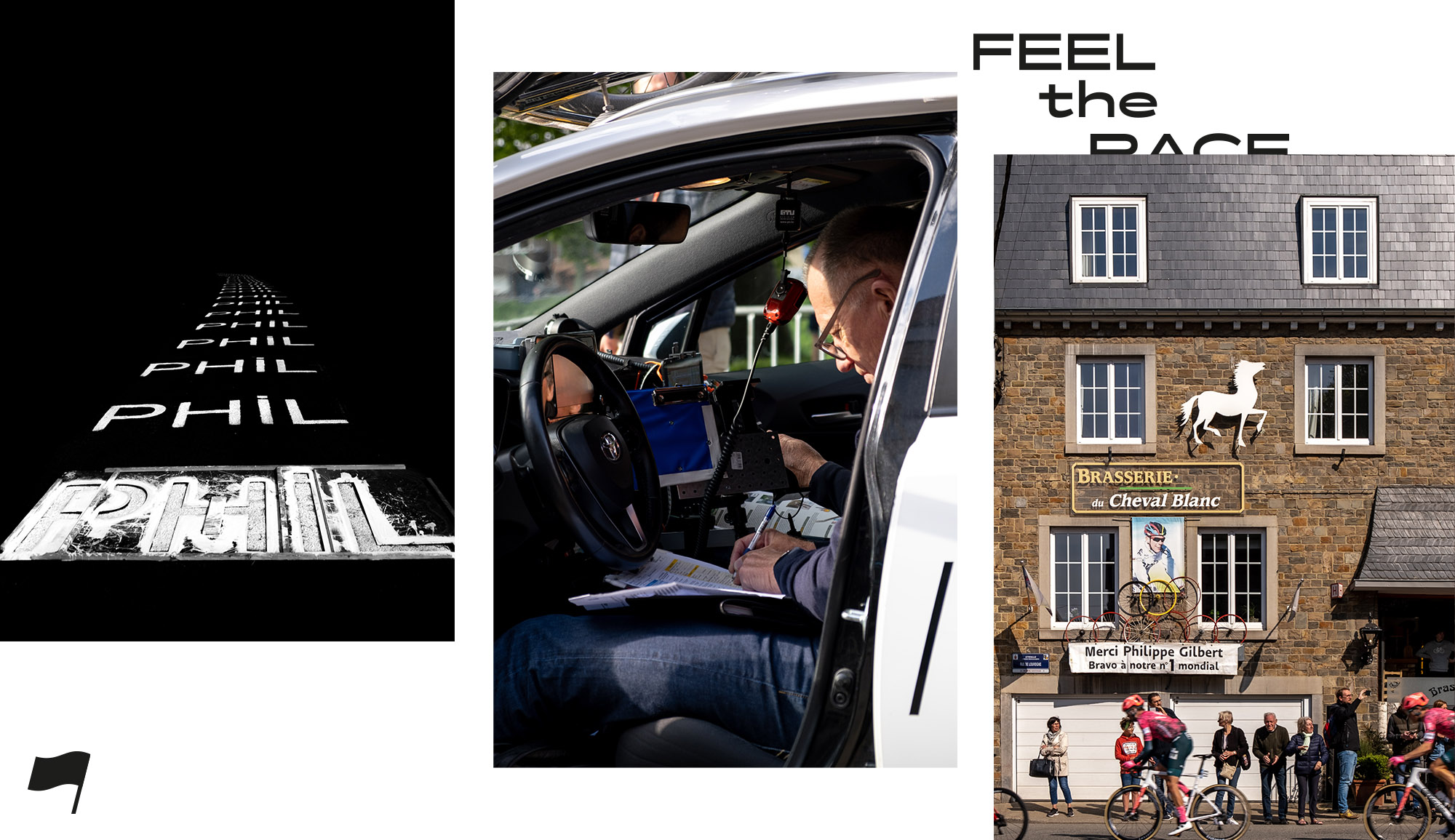
Liège-Bastogne-Liège is the shouts of the fans on La Redoute, and Philippe Gilbert’s name chanted to the most disparate melodies until voices are lost before the race has even arrived. It’s the sound of the helicopters and the car horns of the team cars. It’s the race radio that keeps the sports directors, and the fans who try to tune in to the same race channel, up to date.
It’s the TV commentators providing the background noise of the village bars, where everyone waits before racing to the road a few minutes before the race passes by. It’s the roar of laughter at the jokes told by people who share the same language, the language of cycling, and the fervent clapping of fans seeing their idols riding by, even for just a few seconds.
Liège-Bastogne-Liège is a gunshot in a western gun duel: surgically precise, like Remco’s acceleration. The sound of the gunshot is followed by a deadly silence, because it takes some time to fully understand what’s just happened. When the others realise, it’s already too late for them.
Liège-Bastogne-Liège is a pop-rock song from the seventies. Long, paced and slightly terrible. One of those songs that straddles the fine line between the banal and the legendary. It all depends on the personality and charisma of the singer.
It’s the Meuse that flows silently by and the sound of the wind blowing in the wheat fields between Liège and Bastogne. Moments of peace and calm between one small city and the next where the peloton is welcomed by the enthusiasm and shouts of the fans.

Liège-Bastogne-Liège is the sound of an electric derailleur that constantly shifts the chain from the small ring to the big ring. It’s a classic made of short and lethal climbs, at the top of which there are two options. You either have the legs or you hear the sound of the others shift before you. A sound that tells you that you don’t have much hope of trying for the win.
Liège-Bastogne-Liège is the din along the final straight, after turning right, with people lined on both sides of the street, beating on the barriers to make as much noise as possible. And yet, whoever is there fighting for the win, can’t hear anything, until after they cross the finishing line.
Liège-Bastogne-Liège has the sound of revenge in Remco’s head and the sound of an entire team sighing with relief, having finally sealed a spring victory at the last possible chance. Liège-Bastogne-Liège has the sound of a door that closes and a new chapter that starts: the door of the Spring Classics and the new chapter in the life of a predestined champion.

